


The Function of Ergonomics in Public Seating Areas

Public seating is not merely somewhere to sit—it is an extension of comfort, functionality, and design within public spaces. From airports and hospitals to office spaces, bus stations, and shopping centres, people spend a lot of time in waiting rooms. Ergonomics planning or choosing public seating. If properly designed, ergonomic seating not only enhances comfort but moreover lowers stress levels, improves posture, and makes a lasting good impression on people.
What Is Ergonomics in Seating?
Ergonomics refers to the science of product design that is in accordance with human comfort, movement, and efficiency. When used in seating, ergonomics ensures chairs and benches facilitate natural posture, reduce strain, and accommodate different body types. In public areas, this is even more important because the seating accommodates thousands of users with different needs daily.
Why Ergonomics Is Important in Public Seating
1. Comfort for All
Unlike private seating, public chairs need to support a diverse population. Ergonomically designed chairs offer:
Effective back support against distress during extended waiting times.
Seat depth and width that suits most body shapes.
Soft curves and cushioning to minimize strain.
This exclusivity makes each people feel at ease no matter how long They stay sitting.
2. Health and Posture Benefits
Inadequately designed chairs may cause back strained and constrained muscles, and circulatory problems. Areas that people are made to stay for long periods in public, like hospitals or airports, need ergonomic seating. Ergonomic seating encourages:
Proper spinal alignment.
Less pressure on hips and thighs.
Improved blood flow through weight that is spread uniformly.
This directly contributes to physical health and reduces fatigue.
3. Improved User Experience
Public seating is included in the first impression of a place. Ergonomic chairs with comfort impresses and evokes professionalism and care. For companies, this can improve client contentment and company reputation. In institutions like hospitals, it provides comfort and comfort during difficult moments.

4. Durability and Efficiency
Ergonomic chairs are both comfortable and well-designed to last. Durable materials and careful design minimize wear and tear, even in high-traffic areas. That translates into less replacement, lower maintenance costs, and a higher return on investment.
Core Ergonomic Elements in Public Seating
In choosing or designing chairs for public use, the following are key ergonomic elements to look for:
Backrest Design: Slight recline with lumbar support maintains natural Positioning of the spine.
Seat Height: Optimal height makes feet to be flat on the floor for the great majority of users.
Armrests: Offer comfort, especially for elderly or differently-baled guests.
Breathable Materials: Mesh, shaped plastic, or cushioned fabric that avoids especially“ on long sits.
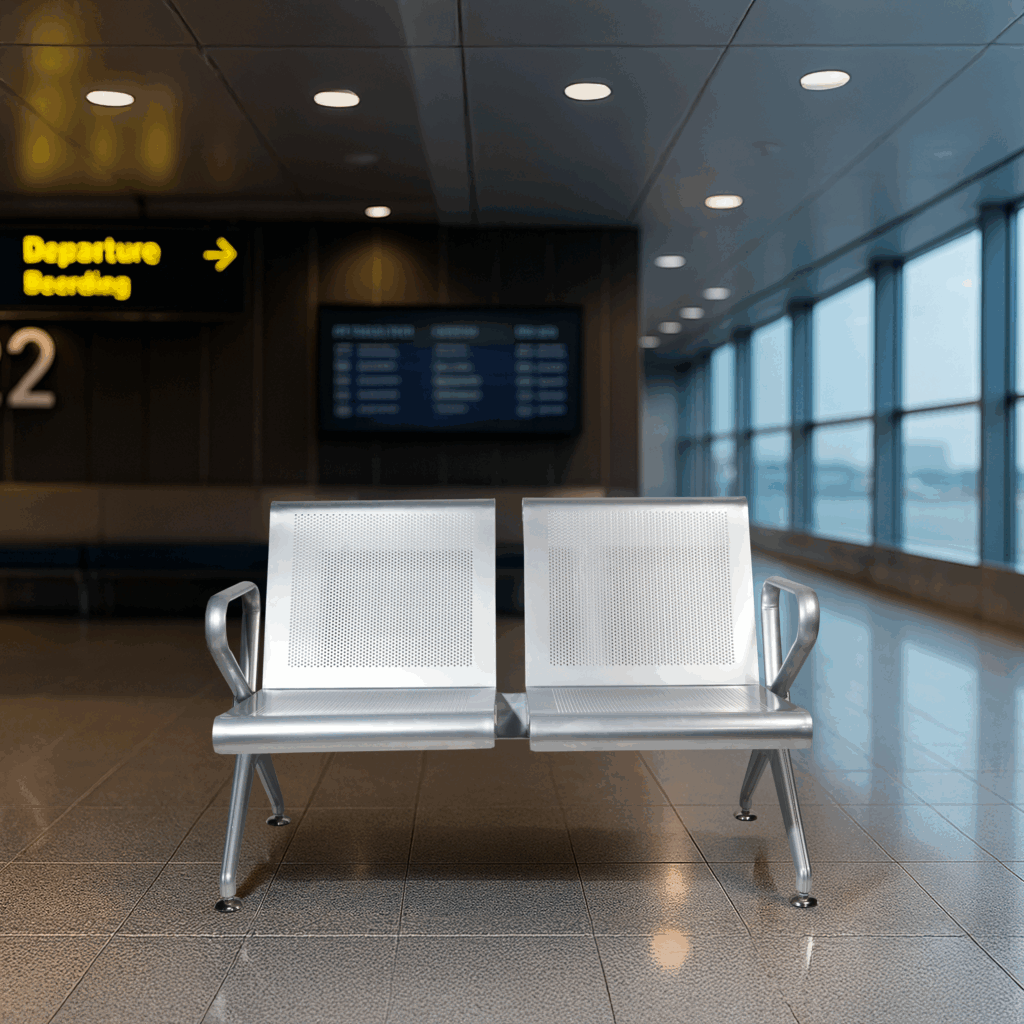
Tandem Seating Options: Ergonomic configurations in 2-seater, 3-seater, or 4-seater benches maximize space while ensuring comfort.

Applications of Ergonomic Public Seating
Hospitals and Clinics: Families and patients wait for extended periods, so comfort is key.
Airports and Bus Stations: Traveler fatigue is minimized and waiting is less stressful with ergonomic seating.
Corporate Suites: Entrance lobbies with tastefully designed chairs contribute to professionalism and client comfort.
Schools and Universities: Libraries and waiting rooms are improved by seating that promotes concentration and relaxation.
Balancing Ergonomics with Aesthetics
Though functionality is paramount, public seating moreover needs to show up inviting. Contemporary ergonomic chairs are provided in slender forms, bold colors, and durable coatings that look good in a variety of settings, from business lobby, healthcare, or cafe waiting place.