

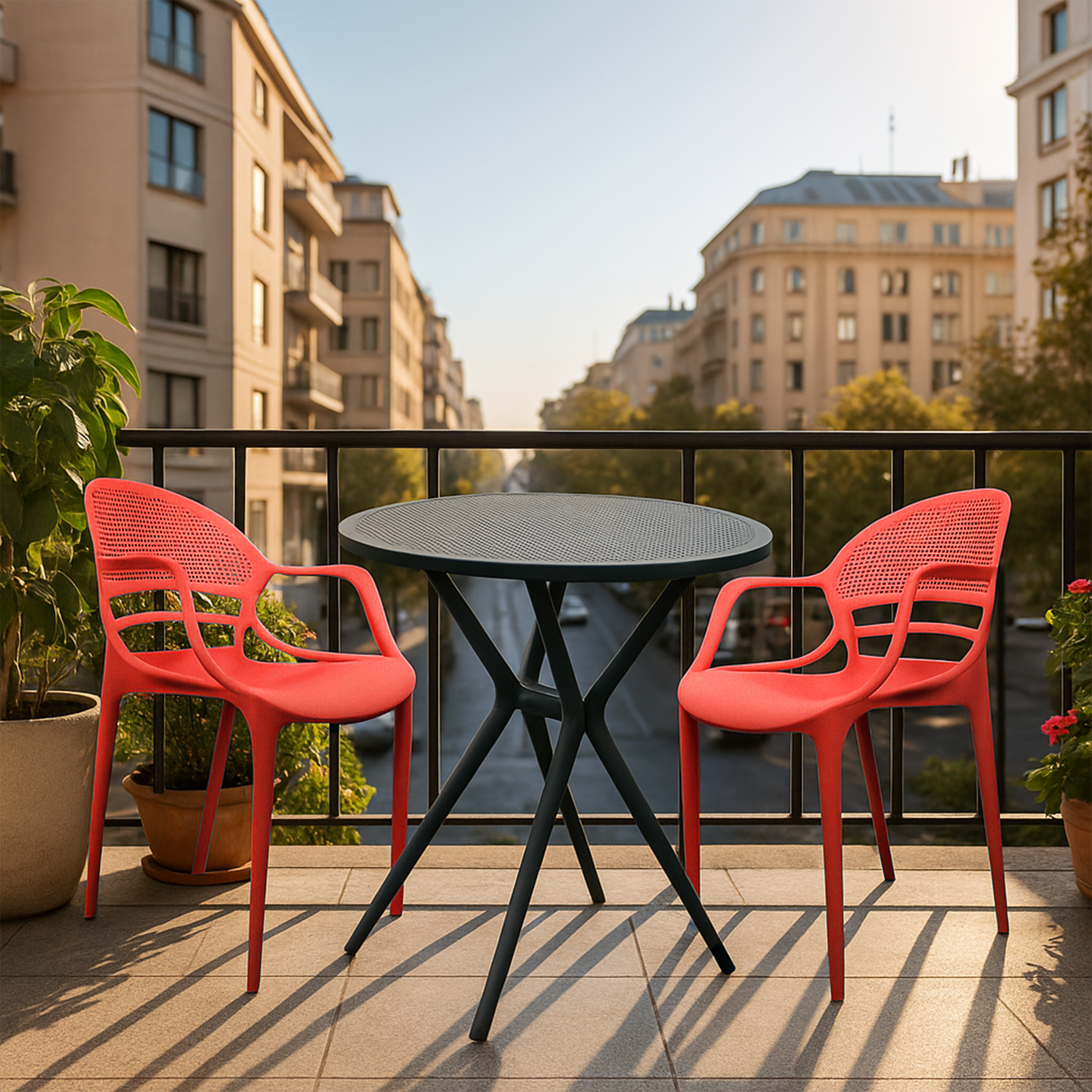
Global Export Trends in Plastic Chair Manufacturing

The world plastic chair manufacturing sector is going through dramatic changes, influenced by changing consumer demand, technological innovations, and changing economic forces. As of 2024, the industry is worth about USD 14.1 billion and is expected to grow to USD 21.4 billion by 2033 at CAGE stands for the annual growth. of about 4.7%. These growth statistics are driven by some major trends that are changing the export scenario of plastic chairs globally.
Domination of Asia-Pacific in Production and Export
Asia-Pacific continues to be the source of plastic chair manufacturing and exports. The place is responsible for more than 420 million pieces of plastic chair manufacturing each year, with the top two positions being held by China and India. China’s robust manufacturing foundation, backed by government efforts to increase the productivity of industry, makes it the highest-volume, lowest-cost plastic chair manufacturer in the world. Automation and industrial robotics have even more effectiveness to such to the to which Chinese producers can continue in order to stay competitive even with increasing labour costs.
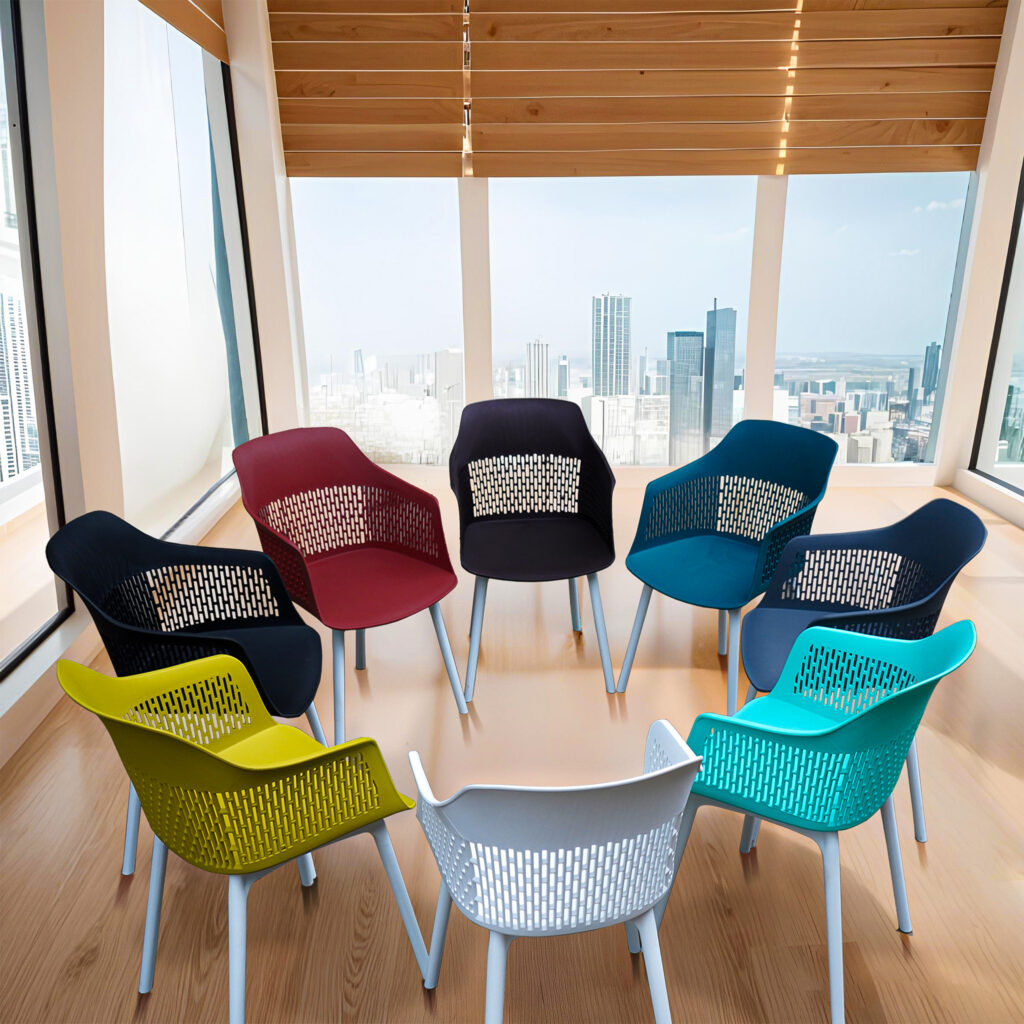
Southeast Asia’s Increasing Role
Although China has long been the market leader, Southeast Asian countries like Vietnam, Indonesia, and Thailand are increasingly becoming key players in the export market of plastic chairs in the global world. The countries are attracting more foreign investments, courtesy of their advantage over others of relatively lower labour costs, convenient free trade agreements, and ego-strategic positions. This trend is part of a larger pattern in which businesses are diversifying their networks of suppliers to cut reliance on every one production and avoid risks associated with geopolitics.
Demand for Sustainability and Innovative Designs
Throughout the world, consumers are getting more environmentally aware, encouraging manufacturers to get innovative and adopt Eco-friendly measures. Increasing demand for plastic chairs made from recycled products and biodegradable plastics is forthcoming. Green manufacturing processes are becoming more important, hurt
regions like Europe and North America, where the environment regulations are strict.
In addition to this, an increasing demand for multi-functional and space-efficient chair designs is being witnessed. Urbanization and the increased number of small living spaces and compact Businesses are fuelling needs for furniture that is flexible without taking up much space. The manufacturers are trying to meet this by creating chairs that are stack able, fordable, or modular, making it convenient for both consumers and businesses.
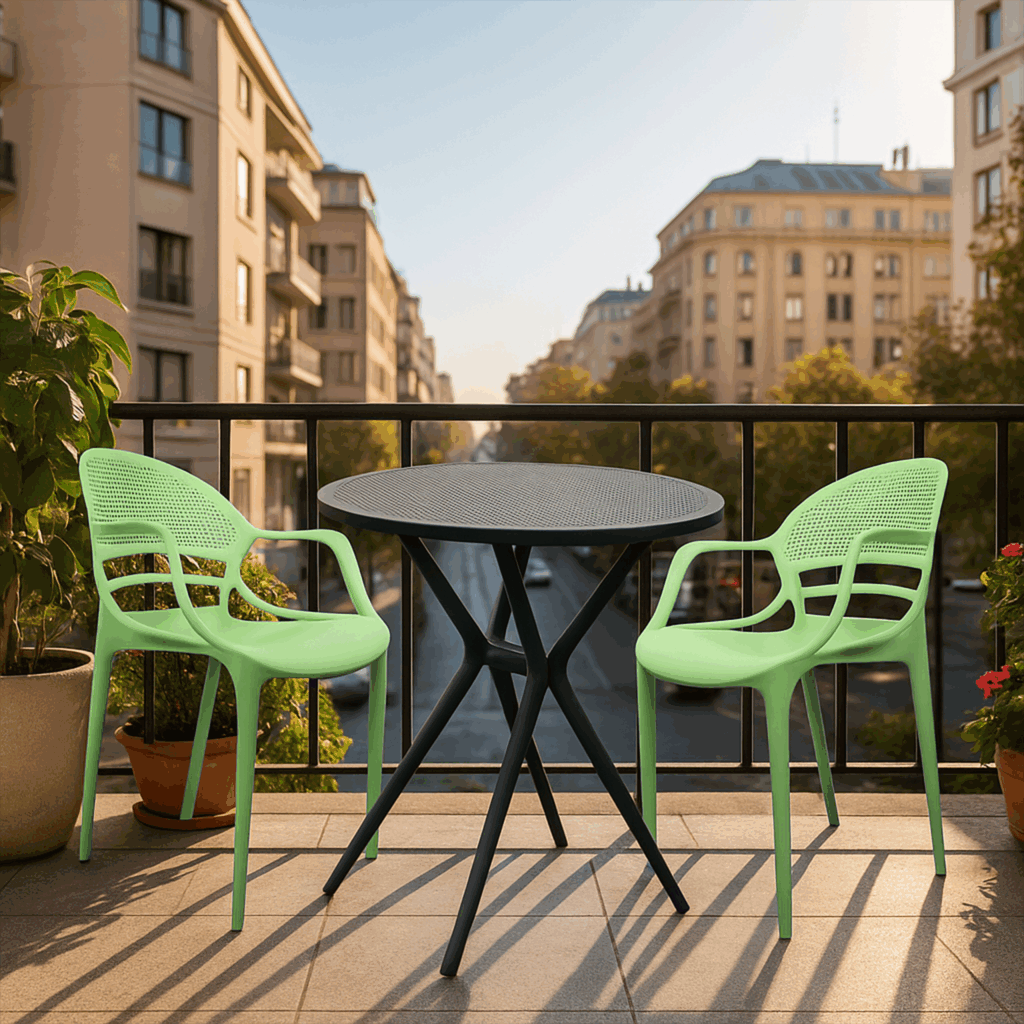
Creativity in Technology in Manufacturing
Creativity in technology is proving to be instrumental in redefining plastic chair production. Sophisticated Techniques for injection in conjunction with with automation are supporting businesses in simplifying manufacture, keeping costs down, and improving the product quality. Energy-efficient technology and intelligent factory concepts are being increasingly embraced, not only to decrease the cost of production but to respond to increasing environmental regulatory standards.
Many producers are embracing the idea of total cost of ownership (TCO), where they put emphasis on long-term economic and environmental costs associated with production machinery. Companies are investing in energy-efficient equipment and predictive maintenance technologies to improve operational efficiency and minimize downtime, thereby making them more competitive in the international economy.
Challenges and Opportunities
While the industry has a positive expansion prognosis, it It can be difficult. by several issues. Raw material prices, especially for polypropylene and other plastics, are becoming more volatile, affecting the bottom line. Moreover, stringent environmental regulations in developed countries are compelling manufacturers to change the processes and materials they use to the level of Compliance is necessary.
European producers, especially, suffer from high energy prices and intense competition from lower-cost producers in Asia. Consequently, most of them are reducing scale or turning their attention to high-end or specialized solutions instead of mass production.
However, these challenges present opportunities. There is large-scale investment in the development of bio-based plastics and recycling technologies. By producing products that are both long-lasting and green, producers are able to capitalize on the increasing market niche of environmentally conscious consumers.
The international plastic chair production sector is ready for consistent growth, led by technology development, environmentalism, and strategic changes in the location of manufacture. With producers evolving to meet consumer needs and public policy pressures, the focus will increasingly be on efficiency, sustainability, and design creativity. Those that will be successful and ready for the global export market competition are those that will adapt and innovate.